
Category: Caregiving

The Hidden Grief of Midlife

Why So Many Women Mistake Grief for Anxiety, Depression, or Burnout

Many women arrive in midlife feeling anxious, exhausted, disconnected, or lost. They may describe feeling overwhelmed by life, frustrated in their relationships, or uncertain about their future. Some wonder if they are experiencing depression. Others assume it is stress, burnout, menopause, or even a midlife crisis.

What many do not realize is that they may be experiencing grief.

Not the kind of grief we typically recognize after the death of a loved one, but a quieter, less visible grief that emerges during one of life’s most significant transitions. It is grief that often goes unnamed because there is no single event to point to and no clear beginning or ending. Instead, it quietly settles into the spaces created by changing relationships, shifting identities, aging, loss, and unmet expectations.

For many women, midlife is the first time life becomes quiet enough to hear it.

When Life Slows Down

During the busy years of raising children, building careers, supporting partners, and caring for others, there is often little time to pause and reflect. Life moves quickly. Responsibilities are constant. There is always someone who needs something.

Then one day, things begin to change. Children grow up and leave home, careers shift or slow down, retirement approaches, you or your spouse retires. Parents age and require more support and relationships evolve. The routines that once defined daily life begin to look different.

It is often during this season that women find themselves taking stock of their lives.  Am I where I thought I would be? Is this the life I imagined? Who am I now?

These questions can uncover a profound sense of grief. Not because life has necessarily been bad, but because it has not unfolded exactly as expected.

“Many women are not experiencing a midlife crisis. They are experiencing a midlife reckoning with loss, change, and unmet expectations.”

The Losses We Rarely Talk About

When we think about grief, we often think about death. Yet many of the losses women experience during midlife are less visible and therefore less acknowledged.

Relationships are often at the heart of this grief. Many women find themselves feeling disconnected from their partners after years of focusing on careers, children, and responsibilities. The intimacy they once shared may feel distant. The friendship, companionship, emotional safety, and shared dreams they expected to enjoy in this stage of life may feel out of reach.

Others are navigating divorce or the death of loved ones. Friendships change as lives move in different directions. Children become more independent and begin building lives of their own. Aging parents may require care and support while simultaneously reminding women of their own mortality.

Alongside these relational losses are quieter losses. Opportunities not taken. Dreams postponed. Adventures never pursued. Years spent caring for everyone else while neglecting personal needs and desires. Many women begin to realize how much of themselves they set aside in service of others.

There is grief in that recognition.

When Grief Looks Like Anxiety or Burnout

One of the reasons hidden grief is so difficult to recognize is that it rarely looks like grief. Instead, it often appears as exhaustion, anxiety, irritability, numbness, or withdrawal.

Women may find themselves saying things like, “I don’t know who I am anymore,” or “Nothing really matters to me right now.” Others describe feeling detached from their lives, going through the motions without feeling connected to what they are doing. Some become increasingly withdrawn, losing interest in relationships, hobbies, or activities they once enjoyed.

There can be a quiet resignation that settles in. “It is what it is” or “This is just my life now.”

Physical symptoms are common as well. Chronic fatigue, poor sleep, difficulty concentrating, brain fog, and a general sense of depletion often accompany emotional grief. What may appear on the surface as depression or burnout is sometimes grief asking to be acknowledged.

“A woman may not be grieving a person. She may be grieving a dream, a relationship, a life stage, or a version of herself.”

Menopause and the Emotional Weight of Midlife

Hormonal changes can further complicate the picture.

As estrogen and progesterone levels fluctuate and decline, many women experience increased anxiety, irritability, sadness, and emotional sensitivity. Sleep disturbances become more common, and chronic fatigue can leave women feeling less resilient in the face of life’s challenges.

Because these symptoms often occur at the same time as major life transitions, it can be difficult to separate hormonal changes from emotional grief. The reality is that both may be happening simultaneously.

A woman may be navigating menopause while also grieving an empty nest, a changing marriage, an aging parent, a chronic health condition, or the realization that certain dreams may never come to pass. The emotional burden can feel overwhelming.

When Grief Becomes Hopelessness

One of the most painful aspects of hidden grief is that it can begin to change how women view their future. As losses accumulate, many women start to believe that it is too late for change. They may feel that the best years are behind them or that there is little left to look forward to. This is where grief can quietly transform into hopelessness.

Women withdraw from relationships. Self care feels pointless. New opportunities are dismissed before they are explored. Possibility begins to shrink. Yet what I often see in counselling is that these beliefs are not reflections of reality. They are reflections of grief. When grief remains unacknowledged, it can convince us that our story is over when in fact we are standing at the beginning of a new chapter.

Finding Meaning Beyond What Was Lost

Healing from hidden grief does not mean pretending losses never happened. It does not mean forcing positivity, or ignoring disappointment. It begins by acknowledging what has been lost and making space for the emotions that accompany it.

Acceptance is often an important part of the process. Not resignation, but acceptance. An honest recognition of what cannot be changed and a willingness to stop fighting reality.

From there, women can begin reconnecting with their values and asking meaningful questions.

What matters to me now? What kind of life do I want to create moving forward? What brings me joy, meaning, connection, and purpose?

For many women, this may be the first time they have consciously explored these questions. After years of focusing on everyone else’s needs, they finally have the opportunity to discover what matters most to them.

“Perhaps the purpose of midlife is not to become someone new, but to return to who you have been all along.”

You Do Not Have to Walk Through It Alone

If you recognize yourself in these words, know that there is nothing wrong with you.

You are not weak or failing. You are not broken, you may simply be grieving.

The losses of midlife are real, even when they are invisible to others. Acknowledging them is not a sign of weakness. It is an act of courage. The good news is that grief does not have to be faced alone. Sometimes healing begins with allowing someone to walk beside you. Someone who can help you name what you are carrying, make sense of your experience, and remind you of your resilience when you have forgotten it yourself.

You are more capable and resilient than you may realize.

This season of life is not over. There is still meaning to discover, connection to cultivate, and joy to experience. Perhaps this chapter is not about mourning what could have been. Perhaps it is about embracing what still can be.


Book a Consultation

Why Summer Feels Surprisingly Hard for Women

Beneath the surface of summer plans and smiling photographs, many women are carrying an invisible emotional load that no one else fully sees.

Summer is supposed to feel light and carefree. It arrives with promises of relaxation, longer evenings, family gatherings, holidays, and time outdoors. Social media fills with images of smiling families, beach vacations, celebrations, and joyful moments that seem effortless. Yet for many women in midlife, summer quietly becomes one of the most emotionally overwhelming seasons of the year.

Instead of feeling rested, many women feel exhausted. Instead of calm, they feel overstimulated, emotionally stretched thin, and disconnected from themselves. Beneath the surface of summer plans and smiling photographs, many women are carrying an invisible emotional load that no one else fully sees.

June and the arrival of summer often bring additional pressures. Graduation parties, family gatherings, vacations, and the disruption of normal routines can quickly become overwhelming. Adult children may return home from university, creating both joy and strain as schedules, expectations, and household dynamics shift once again. For other women, summer may mark the beginning of an empty nest as children grow older, become more independent, and begin creating lives of their own. What can look like freedom on the outside may feel deeply emotional on the inside.

This season can stir up questions many women have quietly avoided asking themselves for years. Who am I now that my children need me differently? What is my purpose beyond caregiving, productivity, and managing everyone else’s lives? What does this next stage of life look like?

After decades of carrying the mental load of careers, caregiving, emotional labour, relationships, and endless responsibilities, many women are simply tired. Yet even in exhaustion, many struggle to allow themselves true rest.

When Exhaustion Becomes Nervous System Overload

Women are often conditioned to believe that rest must be earned. When identity becomes deeply connected to productivity, caregiving, and being needed, slowing down can feel uncomfortable or even threatening. Sitting still may trigger feelings of guilt rather than peace. Even during moments of physical rest, the mind frequently remains active, mentally tracking schedules, anticipating needs, organizing details, and carrying the invisible labour that often falls onto women’s shoulders.

Many women are not failing to cope. They are simply depleted.

Many women quietly hold the belief that “if I don’t do it, it won’t get done.” Over time, they begin holding themselves to impossible standards that others may not even expect from them. Deep rooted cultural expectations often teach women that prioritizing themselves is selfish or indulgent. Many learned early in life that their value came from what they could provide to others rather than simply who they were.

As a result, many women continue pushing themselves long after their nervous systems have become overwhelmed.

What is often dismissed as simply being “busy” can actually be emotional and neurological overload. Poor sleep, brain fog, irritability, anxiety, numbness, overwhelm, difficulty making decisions, and feeling constantly on edge are all signs that the nervous system may be struggling to keep up. Summer itself can become overstimulating with increased social events, less routine, more noise, travel, heat, and the pressure to constantly be doing something.

For women navigating menopause and hormonal changes, summer can feel even more emotionally intense. Warmer weather often means less clothing, increased body awareness, and more opportunities for comparison. Many women become deeply self conscious about changing bodies and begin withdrawing from activities or social situations because they no longer feel comfortable in their own skin. Instead of enjoying experiences, they may spend the season hiding themselves.

Social media only deepens this emotional tension. Carefully curated images of perfect vacations and happy families can create the illusion that everyone else is enjoying effortless, meaningful summers while many women feel lonely, overstimulated, emotionally exhausted, or disconnected. Behind the pressure to create the “perfect summer” for children and family often lies a woman who is quietly disappearing beneath everyone else’s needs.

The Grief That Quietly Arrives in Midlife

What many women are grieving is not simply the passing of time, but the loss of identity that can come when caregiving roles shift.

Midlife also carries a grief that is rarely spoken about openly. As children grow older and begin building lives of their own, many women find themselves looking backward. There can be a longing for earlier versions of life when children were small, routines felt fuller, and their role felt more clearly defined. Thoughts of “when life used to be” can slowly become a way of living emotionally in the past.

What many women are grieving is not simply the passing of time, but the loss of identity that can come when caregiving roles shift. Beneath the loneliness is often a fear that perhaps the most meaningful part of life has already happened.

But perhaps midlife is not asking women to become more productive, more optimized, or more useful. Perhaps this season is inviting something entirely different.

Maybe this is a time to stop proving worth through exhaustion and sacrifice. Maybe it is a season to simply be. To rest without apology. To reconnect with what feels supportive, peaceful, joyful, and meaningful rather than constantly chasing productivity or perfection.

Women in midlife still have wisdom, depth, compassion, creativity, and purpose to offer the world. But perhaps their value no longer needs to be measured by how much they accomplish for others. Perhaps this chapter is less about constant doing and more about learning how to fully live.

Instead of asking “What now?” perhaps the more important question becomes “What is?” What is currently supporting me? What is draining me? What keeps me stuck, disconnected, or unhappy? What allows me to feel calm, rested, alive, and connected to myself again?

Midlife may not be about reinventing yourself entirely. It may be about returning to yourself after years of disappearing into responsibility, caregiving, productivity, and survival.

This summer, perhaps the invitation is not to create perfection for everyone else. Perhaps the invitation is to allow yourself to exist within your own life again. To look back with gratitude for both the beauty and hardship that shaped you. To honour the lessons learned and the life already lived. And to move gently toward a future that feels less performative and more deeply your own.

Caring for Yourself while Caring for Aging Parents

by Lorrie Morales (Guest Post)

Caring for Aging Parents without Losing Yourself.

As a child, I loved the teeter-totter at the playground. Now, as I take my grandson to the park, he gravitates to the same equipment I once enjoyed. The funny thing is that when he sits on it, he fits perfectly; but when I try to navigate my legs and balance myself, it’s awkward and uncomfortable. It reminds me a lot of how life feels in midlife, trying to balance the needs of aging parents while maintaining my own responsibilities, self-care, and mental well-being. And then there’s the guilt.

For many women in midlife, caring for aging parents is a complicated emotional experience. You love them and want what’s best for them, but the stress and anxiety of managing their needs while still working, maintaining relationships, and caring for yourself, can be overwhelming. The key to avoiding burnout is recognizing that you have limits and cannot do everything alone. Thankfully, there are ways to navigate this season of life with more balance and less guilt.

Open, Honest Conversations

The first step is communication. Sitting down with your parents to discuss their needs, both physical and emotional, can provide clarity. Are they struggling with mobility? Do they need social engagement? If they resist help, remind them that your concern is about their safety and well-being. Involving them in decisions honours their independence while allowing you to set realistic expectations. Sometimes, small adjustments such as encouraging them to stay active or engage with grandchildren, can help them feel valued while easing your burden.

The big question many midlife women face is: How can I best support my parents without sacrificing my own well-being? If you have siblings, dividing responsibilities can help. However, for those navigating this journey alone, finding support is essential.

Build a Support System

If you’re the primary caregiver, it’s important to reach out for help. Friends, faith communities, and local organizations often have resources available. Many women feel they must shoulder everything themselves, but care-giving doesn’t have to be an isolated experience. Seeking professional caregiver assistance, meal delivery services, or even a trusted neighbour to check in can alleviate stress.

I recall a dear friend who recruited a small group to sit with her father for a few hours so she could attend her son’s wedding. At first, she felt guilty asking for help, but in the end, she realized how many people were willing to support her. Accepting help is not a sign of weakness it’s an act of self-care and sustainability.

Accepting help is not a sign of weakness it’s an act of self-care and sustainability.

Prioritize Your Well-Being

Midlife is a season where stress and anxiety can take a toll on both mind and body. Many caregivers continue to work full-time while also managing their own families and personal commitments. It’s easy to put your own needs last, but doing so only leads to exhaustion and resentment.

Self-care is not selfish it’s essential. Exercise, nutritious meals, and time with friends are not luxuries; they are necessary for maintaining emotional balance. Whether it’s a yoga class, a quiet walk, or simply enjoying a cup of tea without interruption, carving out time for yourself should be a non-negotiable part of your routine.

That teeter-totter of life will always have ups and downs, but you don’t have to stay stuck at one end. By reframing guilt and embracing self-care, you’ll be in a better position to care for others.

Plan for the Future

One of the greatest gifts you can give yourself and your parents is preparation. Difficult conversations about finances, healthcare directives, and long-term care options are easier when they happen before a crisis occurs.

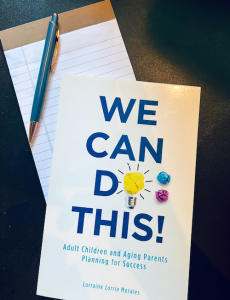
In my book,  We Can Do This! Adult Children and Aging Parents Planning for Success, I discuss the legal, financial, and medical aspects of care-giving. Being proactive can reduce stress and anxiety and provide peace of mind for both you and your loved ones.

We Can Do This! Adult Children and Aging Parents Planning for Success by Lorrie Morales. Calgary Therapist supporting caregivers of aging parents thru self care and suport for the adult in midlife to reduce stress and anxiety.If you find yourself struggling with stress, guilt, or the overwhelming emotions of care-giving, you’re not alone. Let’s find a way to balance the teeter-totter, without losing yourself in the process.

About Lorrie Morales
First and foremost, Lorrie is an educator. Over the course of her career, she has worked as a teacher and filled multiple roles associated with the profession. She has realigned her interests since retirement, but enjoys professional learning, designing, or working as a consultant and workshop presenter. She is an author of a children’s book, self-help book and a youth novel. She is also a contributor to journals and magazines.


As a counselling therapist in Calgary  I support women in midlife who are navigating these complex challenges. If you need guidance in finding balance, setting boundaries, or simply a space to talk, book an appointment with me. Together, we can explore strategies to help you move through this stage of life with more confidence and ease.  -Sandra

Book a Consultation

Sidebar