
How It Works and What to Expect
Accelerated Resolution Therapy (ART) is a brief, structured form of psychotherapy that helps people process distressing memories, sensations, and emotions associated with trauma and other stressful experiences. Developed in 2008 by Laney Rosenzweig, MS, LMFT, ART is an eye movement therapy, which draws on evidence-based components of existing therapies—such as a unique form of Gestalt, imaginal exposure, and imagery rescripting—and adds original interventions for various client issues and diagnoses. It then delivers these components together in a highly structured and time-efficient format.
ART is a “bottom-up” therapy. What does that mean? ART helps regulate and adjust bodily responses by focusing on body sensations, emotional awareness, and movement impulses. This process releases energy trapped in a traumatic “freeze” response or persistent hypervigilance in fight or flight mode. This is important to adjust a client’s immediate reaction to perceived threats. A person may intellectually understand why certain situations trigger them, but their body still sees the situation as an immediate threat. By calming the body while visualizing the traumatic event and replacing negative images with positive ones, ART can significantly reduce or even eliminate emotional reactivity.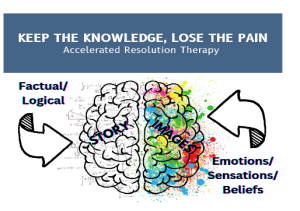
At the core of ART is the principle that painful or intrusive memories are stored in a way that continues to trigger emotional and physical distress long after the event. By re-engaging the brain’s natural memory reconsolidation process under safe, guided conditions, ART helps reprocess these memories in a way that allows them to be recalled without the original physiological and emotional charge. Clients retain the factual details of the traumatic memory, but lose the intense distress previously linked to it.
What Happens in an ART Session
An ART session usually lasts 60 minutes and follows a step-by-step, manualized protocol. The therapist guides the client through sets of horizontal eye movements while the client focuses on distressing images 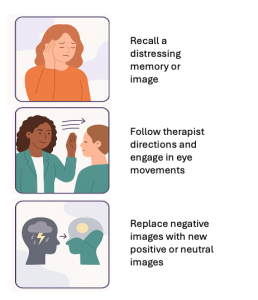 or sensations. Between sets, the clinician may ask the client to notice shifts in body sensations, emotions, or imagery, and to use visualization to replace distressing scenes with neutral or positive ones. This “Voluntary Image Replacement” (VIR) process is central to ART’s design and allows the brain to link new, non-distressing information with the original memory network.
Unlike traditional exposure therapies, ART does not require clients to verbally describe their trauma in detail. Many individuals find this feature especially helpful if they struggle with avoidance, shame, or emotional flooding when recounting their experiences. Clients remain in control at all times, and sessions typically conclude with a sense of calm or resolution rather than prolonged distress.
How ART Differs from Other Therapies
Other trauma therapies rely on exposure to create desensitization. This means a client will have to relive the memory of their trauma in a controlled environment as they rehash painful details. With ART, clients don’t have to recount their trauma in detail to their therapist, making it a safer, more comfortable process. Plus, there’s no homework. ART uses targeted techniques that help you process and resolve trauma effectively, focusing on how memories are stored and experienced without reliving the pain.
ART shares some mechanisms with EMDR, particularly the use of bilateral eye movements and the aim of reducing distress associated with traumatic memories. However, ART differs in its structure and focus: sessions are more directive and include scripted interventions that actively guide the client to replace distressing images. ART is also briefer in format and many issues are commonly resolved in only one session—many clients complete treatment in fewer sessions than traditional trauma-focused therapies such as EMDR, Cognitive Processing Therapy (CPT) or Prolonged Exposure (PE).
Importantly, ART is not hypnosis. Clients remain fully alert, oriented, and aware throughout the process. Nor is ART a “band-aid” fix; while it can produce rapid relief, the method works through recognized neurological processes of memory reconsolidation supported by emerging research in affective neuroscience.
Evidence and Effectiveness
Peer-reviewed studies, including several randomized and controlled trials, have demonstrated that ART can significantly reduce symptoms of posttraumatic stress (PTS) and related conditions. A landmark trial in Military Medicine (2013) found that ART produced large and clinically meaningful improvements in combat-related PTS symptoms, including among veterans who had previously undergone other evidence-based therapies without full resolution. Replication studies have since reported similar outcomes in both military and civilian populations.
Beyond PTS, ART has shown promise in addressing depression, anxiety, grief, phobias, and pain-related distress. Case reports also suggest potential benefits for sleep disturbance and somatic symptoms. Research continues to expand, including neurobiological investigations of ART’s mechanisms and its application in primary care.
Why People Choose ART
Many individuals seek ART because it offers an efficient, empowering way to resolve distress without months of therapy or repeated retelling of painful memories. For some, ART provides a bridge after other therapies have plateaued; for others, it serves as an accessible first-line intervention. Because sessions are typically few in number, ART can be a cost-effective option for individuals and healthcare systems alike.
ART represents an innovative approach that blends structured protocol with deep emotional processing. For clients and clinicians alike, its central promise is simple: to help people remember the facts around difficult memories by removing or replacing the associated negative images, and to restore calm, clarity, and resilience in the process.
