
 Many women come to counselling in midlife saying something similar:
“I don’t feel like myself anymore.”
For some, it’s the emotional weight of menopause, changing sleep, and nervous system dysregulation. For others, it’s accumulated stress, unresolved trauma, relationship changes, or a growing sense that something in life needs to shift.
Midlife is often a powerful turning point—but it can also feel confusing and overwhelming.
One question many women quietly ask before starting counselling is:
“What actually makes therapy effective?”
While there are many therapeutic techniques and approaches, meaningful change often comes from a few core elements that shape the counselling relationship and process.
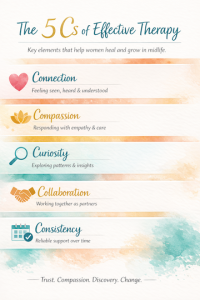
I often think of these as the 5 Cs of Effective Therapy.
1. Connection: Feeling Truly Seen and Understood
Healing begins with connection.
In counselling, this means creating a space where you feel safe enough to talk openly about what you’re experiencing—without judgment or pressure to have everything figured out.
For many women in midlife, this may be the first time they’ve had a space that is fully theirs.
A strong therapeutic connection allows you to:
speak honestly about what you’re feeling
explore difficult emotions safely
begin making sense of experiences that may have been carried for years
When you feel understood, the nervous system can begin to settle—and that’s where meaningful reflection and change can start.
2. Compassion: Softening the Inner Critic
Many women in midlife carry a harsh internal voice:
“I should be handling this better.”
“Why can’t I just get over it?”
“Other people have it worse.”
Compassion in therapy helps gently challenge these beliefs.
Rather than focusing on what’s “wrong,” compassionate counselling helps you understand how your experiences, stress, and life transitions have shaped your current patterns.
This approach can be particularly powerful for women who have experienced:
trauma
burnout
caregiving fatigue
major life transitions
menopause-related emotional changes
Learning to relate to yourself with compassion can be one of the most transformative aspects of therapy.
3. Curiosity: Understanding Your Patterns
Therapy isn’t about analizing you. It’s about exploring your experiences together with curiosity.
Curiosity allows us to look at patterns without judgment. For example:
Why do certain situations trigger anxiety or overwhelm?
Why does sleep become more difficult during stressful periods?
Why do old memories or emotions sometimes resurface in midlife?
Midlife often brings a natural period of reflection. Curiosity helps turn that reflection into understanding rather than self-criticism.
When we become curious about our reactions and experiences, we create space for new perspectives and healthier responses.
4. Collaboration: Working Together Toward Change
Effective counselling is not something that happens to you—it is something we build together.
Collaboration means:
setting meaningful goals
identifying strategies that feel realistic for your life
adjusting the process based on what is or isn’t working
Some women come to counselling wanting practical tools for sleep or anxiety. Others want to process deeper emotional experiences or trauma.
Both are valid, and therapy works best when it reflects your needs, pace, and priorities.
5. Consistency: Creating Space for Lasting Change
Meaningful change rarely happens overnight.
Consistency in therapy allows you to gradually:
build awareness of patterns
practise new skills
process experiences safely
strengthen emotional resilience
For many women in midlife—who have spent decades supporting others—regular counselling can become a grounding space to pause, reflect, and reconnect with themselves.
Over time, this consistent support often leads to greater clarity, emotional balance, and a renewed sense of direction.
Midlife Can Be a Turning Point
Midlife is often portrayed as a crisis. In reality, it can also be a powerful opportunity for growth and renewal.
Counselling offers a space to:
process accumulated stress or trauma
navigate life transitions
improve sleep and nervous system regulation
reconnect with who you are becoming in this stage of life
With the right support, midlife can become a time of greater self-understanding, resilience, and meaningful change.
A Gentle Invitation
If you’re feeling overwhelmed, stuck, or simply not like yourself lately, counselling may provide the space you need to reflect and move forward with greater clarity.
You don’t have to navigate this stage of life alone.
